
See how shift-left testing helps enterprise teams reduce rework, improve release quality, and strengthen delivery when paired with shift-right testing.

Fixing a bug in production can cost 100x more than catching it early. From experience, we know this kind of hidden tax can slow down growth across many companies. That’s why we advocate for rethinking the software development lifecycle and implementing shift left from the very beginning
With Agile practices and continuous monitoring becoming the norm, early testing has emerged as a powerful way to build reliable, scalable software. It’s how testing becomes a continuous presence throughout the software development process instead of a final check. This perspective positions quality as a driver of sustainable growth.
In this guide, we’ll walk you through the key concepts and benefits of shift left software testing, and how to approach it effectively. We’ll also explore how combining it with shift-right testing can enhance your strategy and overall software quality.
Want to move from theory to impact?
See how Abstracta helps organizations apply AI-powered quality engineering across the software lifecycle, strengthening both shift-left and shift-right strategies in complex delivery environments.
Explore our solutions webpage and see worldwide case studies in action!
Shift-Left Testing Overview
Shift-left testing is an approach to software quality that brings testing, validation, and risk detection earlier into the software development lifecycle. For organizations delivering complex software, this helps reduce rework, surface defects sooner, and avoid the late-stage bottlenecks that slow releases, increase delivery risk, and affect software quality.
It is especially valuable in enterprise environments, where quality depends on earlier collaboration across QA, development, and product. Combined with test automation and shift-right practices, shift-left testing helps teams build a more scalable, resilient, and business-aligned quality strategy.
Key Takeaways
- Late defects create avoidable cost, delivery friction, and quality risk, especially in complex software environments.
- Shift-left testing helps teams reduce rework, improve release predictability, and surface issues earlier, before they turn into late-stage bottlenecks.
- Test automation makes this approach scalable, with faster feedback across unit, API, integration, and regression coverage.
- Earlier alignment across QA, development, and product strengthens decision-making and keeps quality closer to the work.
- Combined with shift-right testing, shift left supports a more resilient quality strategy across the full delivery lifecycle.
What is The Shift-left Testing Approach?

Shift-left testing changes the development process by bringing quality activities closer to planning, design, coding, and integration. Instead of concentrating testing near release, teams create earlier feedback loops that help surface defects, gaps, and risks while changes are still easier to understand and address.
Implementing shift-left testing involves early involvement of testers from the requirements gathering phase to make possible a better understanding of project scope and user expectations.
This shift also changes the role of QA. Testers contribute earlier during requirement reviews, discussions around testing requirements, and test design, while developers receive faster feedback through unit, API, and integration checks.
As quality becomes a shared responsibility across QA, development, and product, teams gain better visibility and make stronger decisions throughout delivery. In complex environments, that earlier involvement helps reduce ambiguity, prevent avoidable rework, and keep delivery moving with fewer late-stage surprises.
Benefits of Shift Left Testing: Why It Matters for Your Business
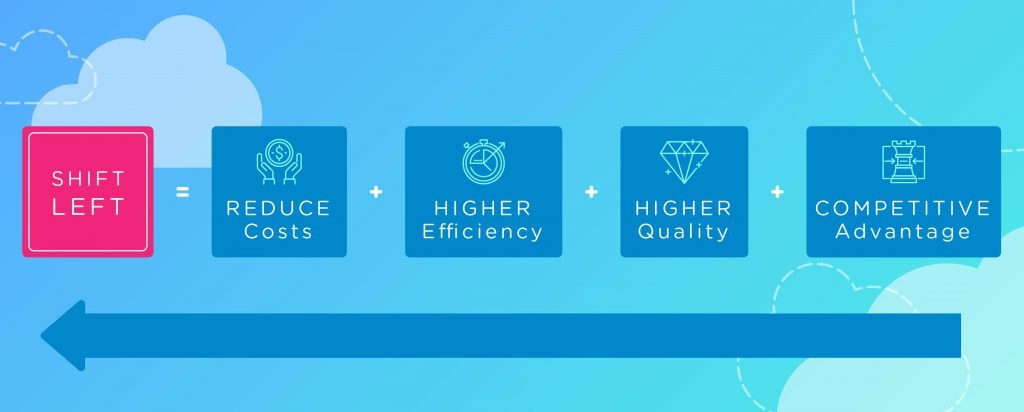
Shift left testing delivers measurable outcomes, making the shift left approach a strategic investment in software quality and long-term growth. Here’s a breakdown of the benefits of shift left testing:
1. Reduced costs
It is still true what Larry Smith said over 20 years ago when the “shift-left” concept was first introduced: “Bugs are cheap when caught young.”
One of the aims of Agile testing is early bug detection, to identify errors as soon as possible. What we mean by as soon as possible is: as soon after the exact moment in which the error was inserted into the system.
When you test with every build (especially during unit testing), you may find smaller errors that are easier to detect, locate, and fix at a lower cost. Maintaining quality as you go also leads to cost savings by mitigating the tremendous costs and unnecessary work of going back and redoing certain things.
Business benefits: Significant cost savings across the software development lifecycle, avoiding the hidden tax of late rework.
Need a stronger test automation approach?
Reach out to us! See how we improve coverage, speed, and reliability.
2. Increasing Efficiency & Quality
We often find that the increased levels of automation when shifting left allow for better test coverage, as well as:
- Increasing test coverage by running more tests in the same amount of time
- Freeing up time for testers to focus on more challenging and rewarding tasks
- Reducing human error
- Monitoring performance over time
- Code quality checks
- Built-in security checks
- Reducing issues in production (that users will face)
Beyond these benefits, being able to start testing sooner invariably results in more quality, as testers are no longer rushing to find all the errors at the end. Automated feedback loops also allow developers to fix errors while the code is still fresh in their minds, which reduces friction and supports more reliable development.
This requires adopting a shift left mindset, where quality is owned collectively and considered from day one.
Business benefits: Apart from improving the testing process, this efficiency frees up development and operations teams to focus on innovation, strengthens overall software quality, and shifts the emphasis from defect detection to defect prevention.
3. Gaining a Competitive Edge
Shifting left your QA gives you a competitive edge in two ways: you can speed up time to market and attract top talent.
About staying competitive in today’s ever-changing technological landscape, Alon Girmonsky, founder of BlazeMeter, said it best:
“Today, the barrier to compete is minimal, and the only way to defend one’s stature is by innovating in short iterations… meaning adopting Agile.” – Alon Girmonsky
As we can all agree that it is important to deliver software more quickly, it also shouldn’t be rushed out the door. Shift-left testing answers the problem of accelerating development without sacrificing quality, leading to higher customer satisfaction with each release.
Business benefits: The result is faster, consistent releases that exceed customer expectations, strengthen quality assurance, and build a stronger position in highly competitive markets.
4. Accelerating Time to Market
The pressure to release faster is real, but doing so without the necessary checks often leads to setbacks that cost more than a delayed sprint. Shift-left testing helps teams move quickly without sacrificing stability.
By catching defects early, validating assumptions sooner, and integrating quality from the start, teams can deliver functionality with fewer surprises and less rework, minimizing late-stage bottlenecks. When testing becomes part of the overall development cycle, shift-left testing accelerates release cycles and supports faster software delivery to end users.
Shifting left also helps maintain a constantly shippable codebase, enabling teams to release high-quality software more frequently.
Business benefits: This acceleration across the development cycle allows organizations to capture market opportunities earlier and maximize ROI from each release.
5. Encouraging Stronger Collaboration
One of the most meaningful shifts doesn’t come from new tools but from new conversations. When quality is part of the conversation from day one, QA, Dev, and Product stop working in isolation and start co-creating.
This leads to sharper definitions, fewer misunderstandings, and stronger outcomes. Shift-left testing invites QA to help shape the work, not just validate it. And when collaboration starts earlier, the entire development process becomes smoother, more thoughtful, and more aligned with user needs.
Business benefits: Early collaboration across testing and development teams also reduces friction and creates a culture of continuous improvement.
6. Identifying Risks Sooner
The later you discover a critical issue, the harder it is to solve. Shift-left testing allows teams to identify risks before they escalate, from code vulnerabilities to performance bottlenecks to misaligned expectations.
By integrating testing into early design and planning stages, you gain visibility into what might go wrong while you still have time to course-correct. This helps build confidence across the team, making releases less stressful and more predictable.
Business benefits: Early risk visibility limits financial exposure, protects brand reputation, and allows organizations to plan releases with greater certainty.
Why Automation Matters in Shift-Left Testing
Test automation is essential in shift-left testing because it enables reliable verification of application functionality at every stage of development, from local builds to full-scale deployments. Moreover, automated tests should be created alongside the development process and integrated into continuous integration and deployment pipelines to detect defects early and reduce regression issues.
Automation helps shift-left testing scale across complex delivery environments. It gives teams faster feedback, reduces manual bottlenecks, and keeps quality signals closer to the work so issues surface earlier and decisions can happen with better visibility.
It is especially valuable when it helps teams:
- Validate changes earlier and more consistently across the development flow
- Reduce friction between QA, development, and product by keeping feedback closer to implementation
- Support the right mix of checks, from API testing and performance testing to exploratory testing where human judgment adds more value
When connected to CI/CD, automation helps teams run automated tests as part of everyday delivery instead of treating validation as a separate phase. That gives testers more space for analysis, collaboration, and continuous learning across the software development cycle, while reducing the testing bottleneck that typically occurs right before release.
Automation helps teams scale earlier feedback, but tools alone do not remove every delivery bottleneck. In complex environments, shift-left testing still depends on the right conditions, workflows, and level of testing maturity.
Facing release risk, legacy complexity, or critical integrations? See how our AI-powered quality engineering approach helps enterprise teams build quality into delivery.
When Shift-Left Testing Doesn’t Work

Maybe have you already heard all of those benefits, but you are STILL not convinced about shift-left testing for this reason: you’ve seen that even Agile teams can face the same bottlenecks as seen in Waterfall.
Shift-left testing can deliver strong results, but it does not remove every delivery bottleneck on its own. In complex environments, teams can still run into delays when dependencies, test environments, or shared services are not ready early enough.
That is exactly where many teams hit the limit of shift-left testing as a practice and start seeing the need for a broader quality engineering strategy.
Service virtualization is often part of the answer. By emulating the behavior of essential components before they are fully available, teams can run integration tests earlier in each sprint and reduce the waiting time that usually slows delivery.
Still, that alone is rarely enough in enterprise environments. Earlier feedback depends on the right conditions being in place: stable test environments, realistic test data, reliable integration points, and delivery workflows that allow teams to validate changes without waiting for the entire system to come together.
One Important Note
Shift-left testing depends on more than intent and tooling. It requires a level of testing maturity that allows teams to sustain earlier feedback across delivery and act on it with confidence.
For example, test automation becomes much harder to scale when environments are unstable, dependencies are inconsistent, or test data is not ready. Without those foundations in place, shifting QA to the left can create new friction instead of reducing it.
Is your team ready to shift left?
Try our 9-question assessment to find out how your testing stacks up and get custom tips for your software testing strategy.
Take our software testing maturity assessment!
From Shift Left to Shift Right
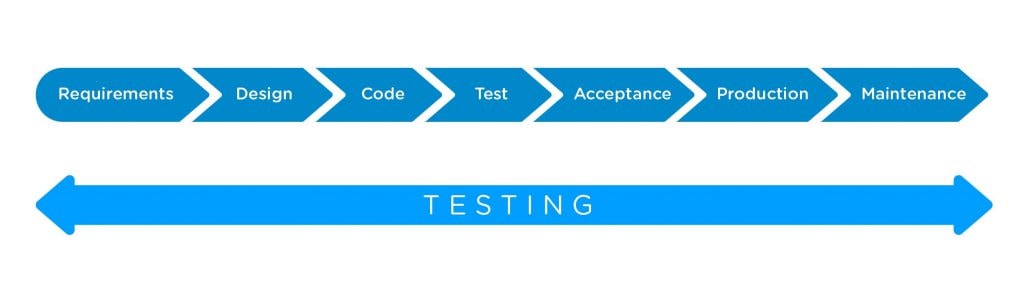
Shift left testing focuses on early defect detection, and its strength lies in the early detection of issues that could escalate into costly production failures. Yet even the best shift-left approach cannot address everything.
Shift left testing is often paired with Shift Right testing, which monitors user behavior in production environments. To gain a complete view of software quality, teams also need shift right testing—validating performance, reliability, and user experience in production environments.
Shift Left vs Shift Right Testing
What’s the Difference Between Shift-Left and Shift-Right Testing?
The difference between shift-left and shift-right testing lies in when testing occurs within the software lifecycle. Shift-left testing happens earlier in development, while shift-right testing validates quality and performance in production environments. While the shift-left strategy aims to prevent issues early, the shift-right strategy focuses on learning from real user behavior once the software is live.
To dive into the topic, we share an image that helps illustrate a key shift in how we think about testing. For a long time, testing was something that happened near the end, once everything was built, as a single stage. The shift-left approach turns that idea on its head. It brings testing into the earliest stages of development, so that we can prevent issues before they even happen.
Now, you might be wondering: what about testing that happens after release? That’s where shift-right testing comes in. Instead of focusing on prevention, shift right is all about observation: seeing how the system behaves in the real world, under real conditions. It includes monitoring, A/B testing, chaos engineering, collecting feedback directly from users, and validating software quality in real-world scenarios.
Why It’s Worth Combining Shift Left Testing and Shift Right Testing
Although this article puts the spotlight on shift-left testing, especially because of its impact on catching bugs early and making collaboration more fluid, we advocate for looking at the full picture. Relying on just one approach can leave blind spots.
That’s why combining shift-left with the shift-right approach is so powerful. It lets teams build quality from the start and continue refining it once the software is live. Together, they support a continuous testing mindset that stretches across the entire development lifecycle.
If you’re curious about how to bring both sides together, we invite you to explore this article.
FAQs about Shift Left Testing

What Is Shift-Left Testing?
Shift-left testing is an approach to software quality that brings testing, validation, and risk detection earlier into the software development lifecycle. Instead of waiting until the end of delivery, teams identify issues sooner, reduce rework, and improve release quality by keeping feedback closer to planning, development, and integration.
What Are The Four Types of Shift-Left Testing?
The four types of shift-left testing include traditional shift-left testing, incremental shift-left testing, Agile/DevOps, and model-based testing.
- Traditional testing: Moves functional testing to the early stages, catching issues right from the start and saving time and money down the line.
- Incremental testing: Integrates testing into each development increment, so every new feature gets tested immediately, maintaining high quality at every step.
- Agile/DevOps: Combines Agile and DevOps practices to support continuous testing throughout delivery, helping teams identify issues earlier and keep feedback closer to implementation.
- Model-based testing: Uses models to design and run tests earlier, helping teams identify design issues before they expand into later-stage defects.
What Is The Difference Between Shift-left and TDD?
Shift-left and TDD (Test-Driven Development) are complementary but distinct approaches. Shift-left is a general philosophy advocating for testing as early as possible in the development cycle. In contrast, TDD involves writing tests before the production code. In TDD, tests guide the development of the software. Shift-left, however, is broader and includes various practices and types of testing.
What Is Shift Right Testing?
Shift right testing refers to testing done in production environments to observe real user behavior and system performance. It includes practices like A/B testing, monitoring, and canary releases, helping teams validate quality after deployment and drive improvements based on real-world data.
What Is The Difference Between TDD and Shift-Right?
TDD (Test-Driven Development) and shift-right are distinct strategies. TDD focuses on writing tests before the production code to guide software development. Shift-right, on the other hand, emphasizes testing and monitoring in the production environment. While TDD aims to catch issues early in the development process, shift-right focuses on boosting quality and performance in the live environment, often using techniques like A/B testing, canary releases, and real-time monitoring.
What Is Shift Left Security Testing?
Shift-left security testing integrates security checks and practices earlier in the development lifecycle. This proactive approach helps identify vulnerabilities at the design and development stages, reducing risks and improving the overall security posture of the software.
What Is an Example of Shift Left Testing?
An example of shift left is engaging testers in sprint planning to review testing requirements and detect issues before coding starts. Developers create unit tests while testers build automated integration tests, enabling continuous validation and reducing costly defects later.
Why Is Test-Driven Development Important in a Shift-Left Strategy?
Test-driven development (TDD) supports shift-left testing by moving validation closer to implementation. When tests are written before the actual code, teams can clarify expected behavior earlier, reduce ambiguity, and align implementation with the intended specifications from the outset.
How Do Development and Testing Teams Work Better in a Shift-Left Model?
In a shift-left model, development and testing teams work more effectively when quality conversations start earlier and feedback stays close to implementation. That usually leads to clearer requirements, faster issue detection, less rework, and stronger release decisions across the delivery process.
Why Does Shift-Left Testing Depend on Continuous Feedback?
Shift-left testing works best when teams build continuous feedback into everyday delivery instead of treating validation as a separate stage. That feedback becomes far more useful when it is connected to real development workflows, where decisions can still be adjusted without creating downstream friction.
How Should Teams Use Automated Tools in a Shift-Left Strategy?
The value of automated tools comes from helping teams validate change earlier, more consistently, and with less manual friction. The strongest strategy focuses on the relevant tests for each context, rather than trying to automate everything at the same depth.
Why Do Developers Write Tests Earlier in Shift-Left Teams?
When developers write tests earlier, teams can validate behavior closer to implementation and reduce the cost of fixing defects later. In many cases, writing unit tests earlier also improves confidence in code changes and supports more reliable deployment processes.
How We Can Help You
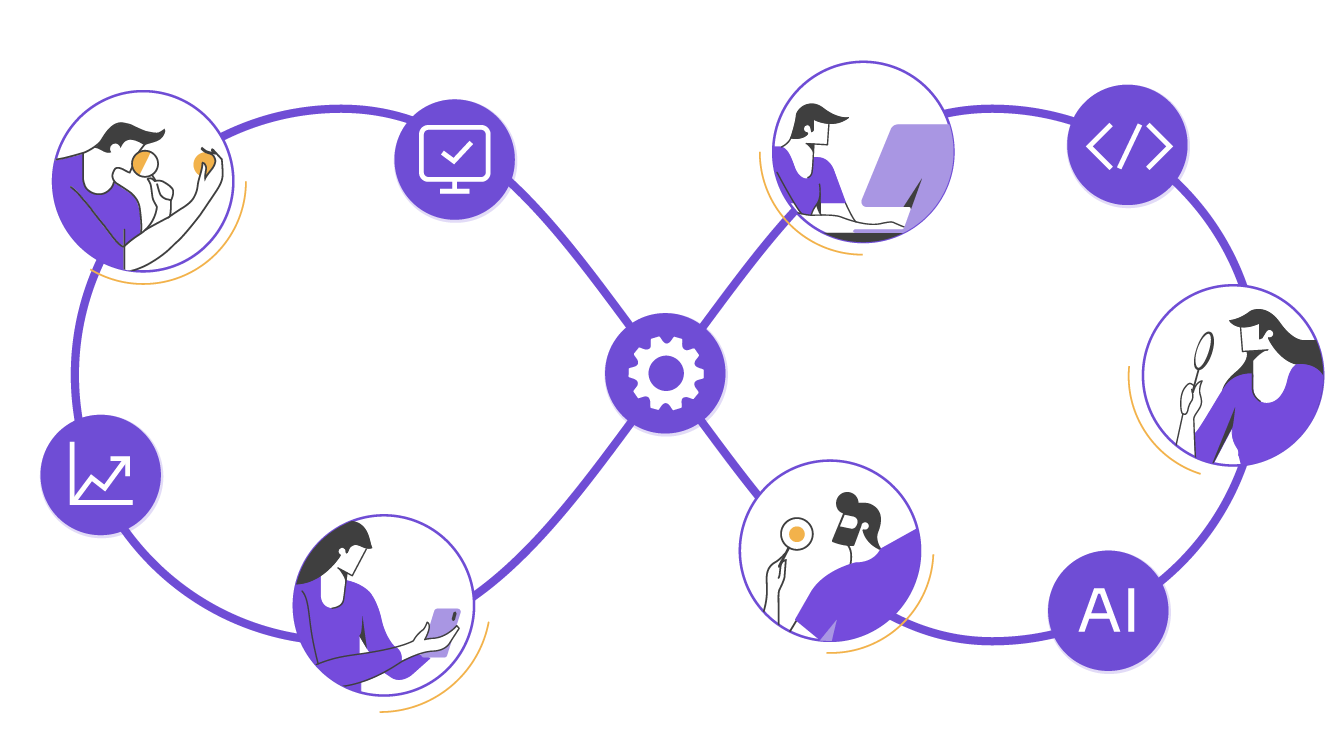
With nearly 2 decades of experience and a global presence, Abstracta is a technology company that helps organizations deliver high-quality software faster by combining AI-powered quality engineering with deep human expertise.
Our expertise spans across industries. We believe that actively bonding ties propels us further and helps us enhance our clients’ software. That’s why we’ve built robust partnerships with industry leaders like Microsoft, Datadog, Tricentis, Perforce BlazeMeter, Saucelabs, and PractiTest, to provide the latest in cutting-edge technology.
By helping organizations like BBVA, Santander, Bantotal, Shutterfly, EsSalud, Heartflow, GeneXus, CA Technologies, and Singularity University, we have built an agile partnership model that helps teams strengthen software quality, accelerate delivery, and navigate complex initiatives with the right blend of expertise, strategy, and execution.
Testing Maturity Model
Our software testing maturity model is a comprehensive framework that helps teams improve the quality of their software testing efforts, including all types of software testing. This model emphasizes the importance of testing early, a well-constructed test environment, and the use of reliable testing tools to meet the needs of users and stakeholders.
Processes, Technology, and People
Effective processes and tools are crucial, but they must also align with the skills and capabilities of your team members. Our approach allows us to create a well-rounded, adaptable test plan that fosters active participation and effectively meets test deliverables.
Visit our Test Strategy Services page and contact us to grow your business!

Follow us on Linkedin & X to be part of our community!
Recommended for You
Disaster Recovery Testing Plan: 7 Key Steps


 Abstracta


